
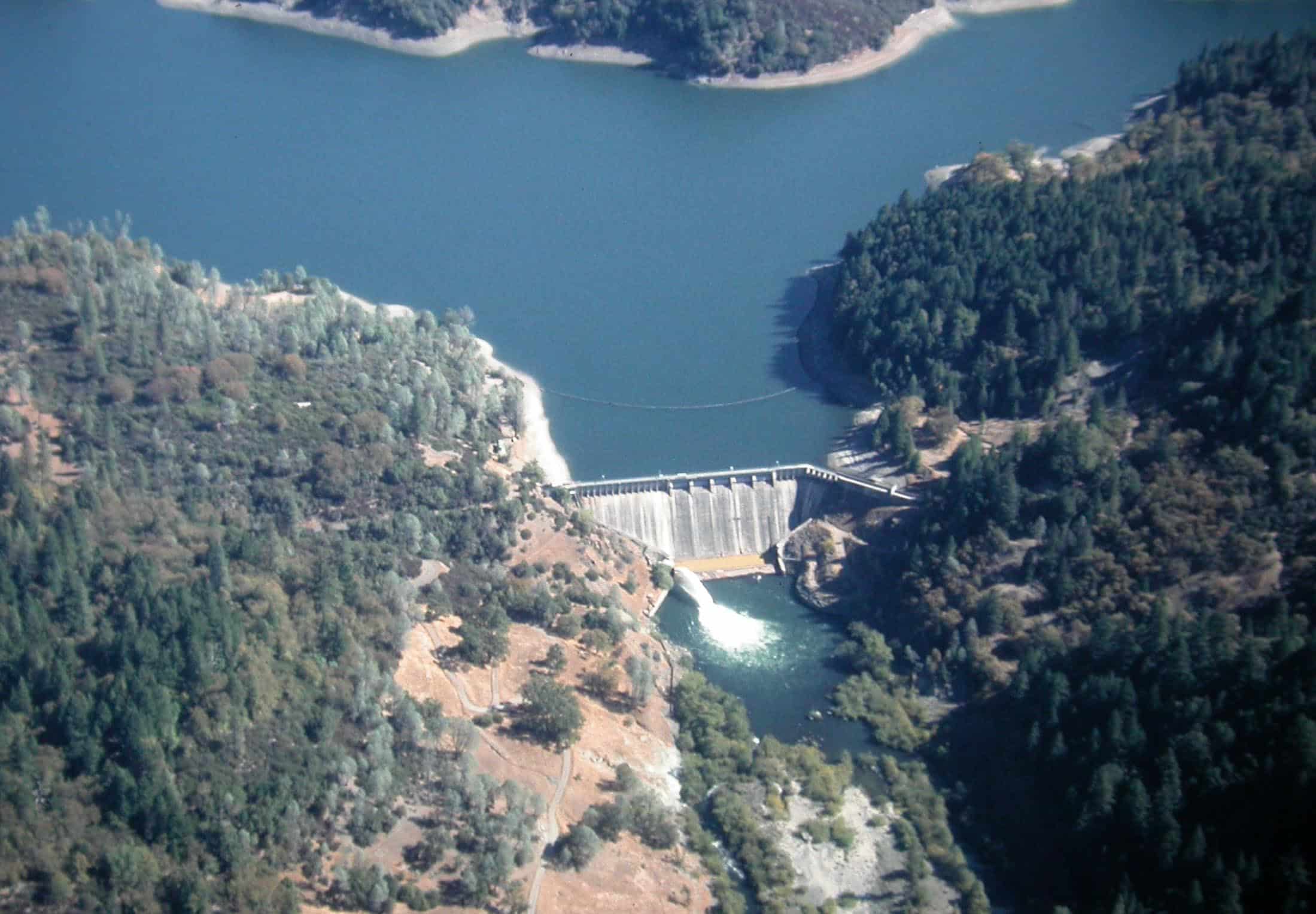
Nearly every year for the past decade, PG&E has been unable to meet their license required and contractual flows out of the Potter Valley Project. This is due to both climate change, and the many failures of the Project which prevent the reservoir from being fully filled or emptied, and require careful management of water releases to prevent damage to the only low-level water outlet.
PG&E is also doing their best to limit harms to the Eel’s native fish holding in the river downstream of Scott Dam by trying to preserve cold water in the Lake Pillsbury Reservoir. Trying to balance all of these needs is what leads to PG&E requesting a “variance,” or permission to deviate from their required flows, nearly every year.
The Federal Energy Regulatory Commission (FERC) must grant this permission every year. The sooner FERC approves the request, the better. It gives PG&E time to slowly reduce diversions to the Russian River, but also the opportunity to actually preserve some cold water and prevent additional harms to native steelhead in the upper river.
Lethargic action from FERC has already caused catastrophe in the past. In 2023, FERC did not approve of PG&E’s flow variance request until October, far past the time of year in which water temperatures rise dangerously high for juvenile salmonids. When the water released from the Project into the Eel River reaches 18° C, invasive Sacramento Pikeminnow become able to outcompete native juvenile fish. This is why it’s crucial to maintain a cold water pool — which can only be done if FERC approves these yearly flow variance requests before the hot summer season.
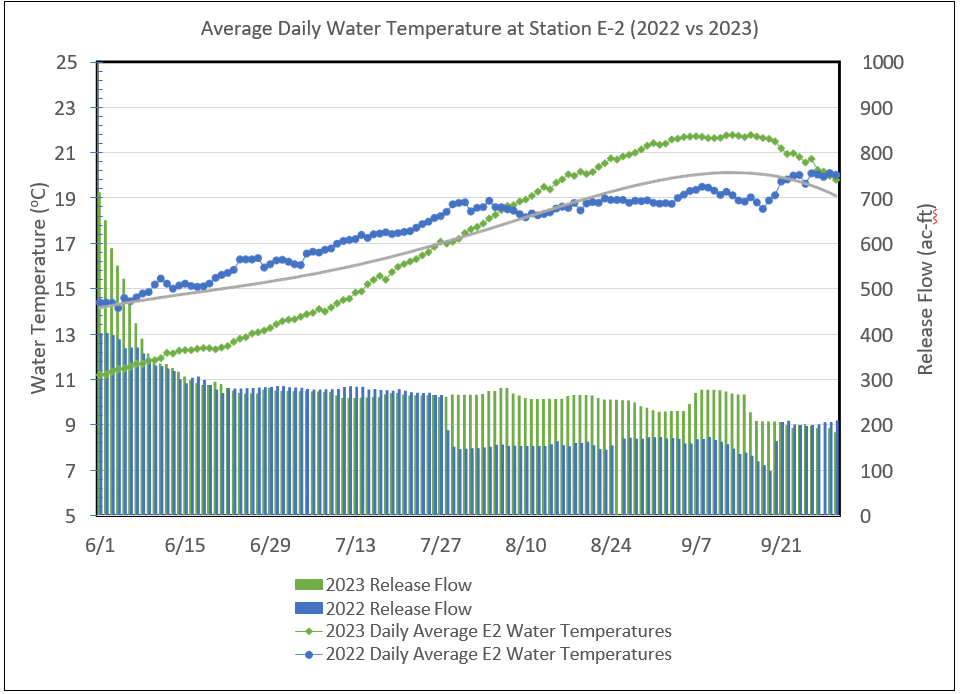
In 2022, shown in blue, FERC approved PG&E‘s variance request early enough that release flows remained at safely low temperatures. But in 2023, shown in green, a five month delay caused late season water temperatures to rise dangerously high for juvenile salmonids.
Every year, Friends of the Eel River submits comments to FERC urging the Commission to approve the flow variance in a timely manner.
We are not alone in submitting comments on the variance. In a surprising and welcome turn of events, nearly every comment submitted on PG&E’s 2026 variance request was supportive. This is great news because it makes FERC’s job approving the variance request much easier. We are feeling quite hopeful that with this likely warm and dry season ahead, PG&E will have the flexibility they need to best manage releases from the Potter Valley Project and limit harms to the Eel’s native fish.
Want to learn more about this year’s variance? Check out this interview from Monday Morning Magazine with Alicia Hamann, Executive Director of Friends of the Eel River, and guest host Alicia Littletree Bales: