
Comments submitted on behalf of six groups: Friends of the Eel River, Sierra Club, Native Fish Society, Save California Salmon, California Sportfishing Protection Alliance, and Northern California Council, Fly Fishers International.
-
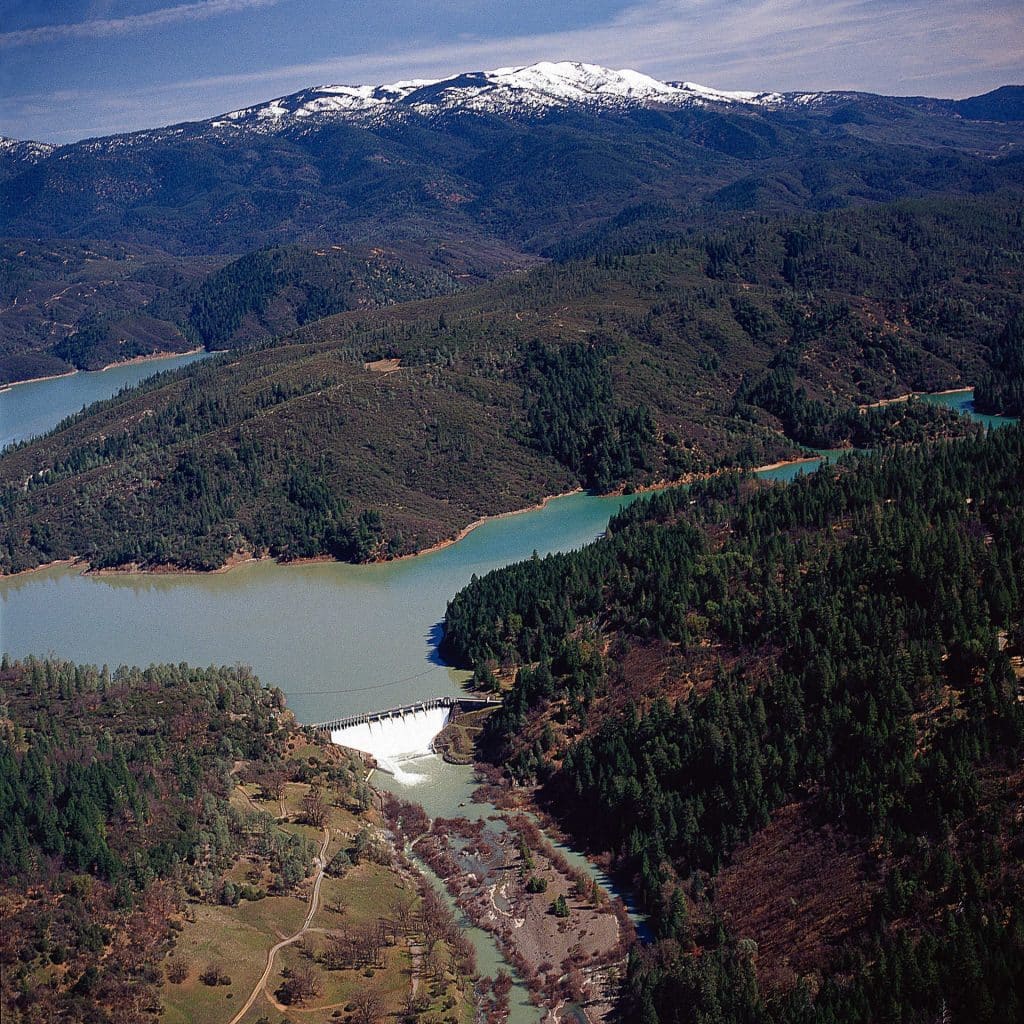
- Scott Dam and Lake Pillsbury
-
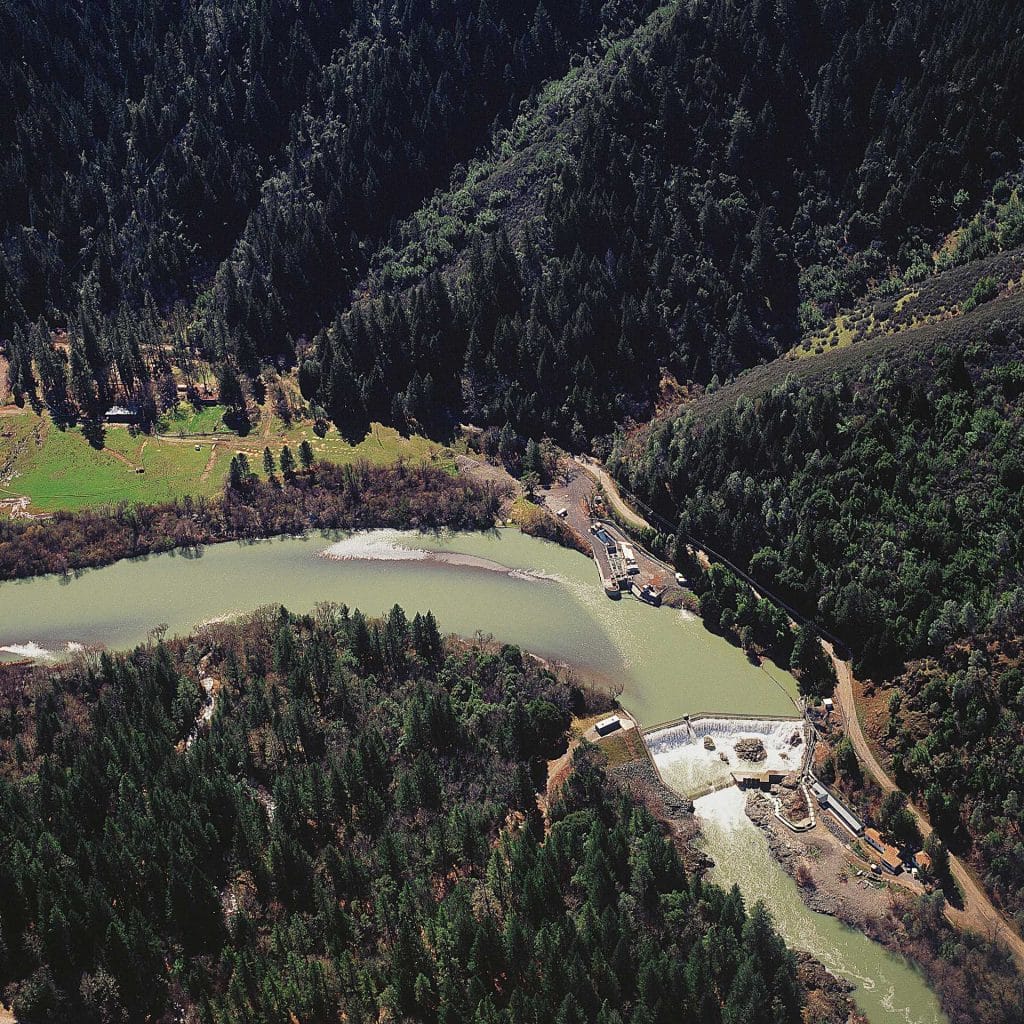
- Cape Horn Dam and Van Arsdale Reservoir
Summary
Across a broad range of potentially affected resources and interests, Pacific Gas & Electric’s (PG&E) License Surrender Application lays out substantial evidence that removal of the Potter Valley Project dams on the upper mainstem Eel River will more than meet the Federal Energy Regulatory Commission’s “broad public interest” test for decommissioning hydroelectric facilities.
Our comments are largely supportive of PG&E’s proposal, with suggestions to add considerations for the following items, among others:
- Restricting the movement of invasive species;
- The role of beaver in shaping riverine and wetland habitats in the upper Eel River;
- Coho salmon which are currently absent from the upper basin but likely used this habitat historically;
- Potential harm to salmonids from 6PPD-Q;
- Adding wildlife and botanical species known to occur in the project area that are absent from the License Surrender Application (LSA).
The Potter Valley Project (PVP) is so constrained by storage reductions and operational limits that PG&E states that it cannot meet its licensed flow schedule in most years. Vulnerability of Scott Dam to a seismic event only compounds the susceptibility of the reservoir and diversion system to the Eel River’s heavy sediment load. Failure of the project transformer means the money-losing project no longer even generates electricity at all.
Removal of Scott and Cape Horn Dams will open up substantial suitable salmonid habitat in the upper basin above Scott Dam that has been inaccessible for a century, providing for recovery of Chinook and steelhead and perhaps even coho populations. There is good reason to believe that dam removal will lead to the recovery of the now-extinct southernmost summer steelhead population on Earth, as its genetic legacy remains in the rainbow trout trapped behind Scott Dam.
Because the LSA as submitted to the Federal Energy Regulatory Commission (FERC) is the final version of the previously public Draft LSA, on which we provided detailed comments, we did not replicate our comments on the Draft in these comments; rather, we attached our comments on the Draft and primarily commented on changes made from the Draft to the Final LSA.
Read our Draft LSA Comments, our Final LSA Comments, or see below for additional details.
Broad Public Interest Standard
We emphasize that the Eel River dam removal proposed by PG&E in its LSA clearly meets the “broad public interest” standard that FERC applies to proposals to decommission federally licensed hydroelectric projects.
We acknowledge that removal of the Eel River dams will entail significant water quality impacts on the Eel River as accumulated sediments are released following dam removal.
The California State Water Resources Control Board will assess the water quality impacts of dam removal under their 401 Clean Water Certification process, and require conditions to mitigate any unavoidable impacts.
Restoration of Federal Public Lands
Reflecting the U.S. Forest Service’s (USFS) position over the past decade, we wrote that PG&E should be required to restore the lands of the Mendocino National Forest above Lake Pillsbury. (The Forest Service did not file comments on the LSA; rather, the U.S. Department of Agriculture filed comments naming the Natural Resources Conservation Service as the contact agency for PVP matters in place of the USFS.)
Consistency with Federal Law
We outlined the ways in which operation of the PVP entails continuing violations of federal law, including the Endangered Species Act (ESA) and Clean Water Act, which will be corrected by dam removal.
We note dam removal as proposed here is entirely consistent with the Federal Power Act and FERC’s regulations, that “it is in the broad public interest that electric utilities be allowed to divest themselves of unproductive, deteriorating, and/or hazardous facilities,” and that FERC cannot compel PG&E to continue to operate the PVP at a loss indefinitely.
Existing Project Operations
We note that existing project operations differ significantly from those anticipated when the current flow schedule for the project was adopted twenty years ago, largely because of reductions in available storage in the Lake Pillsbury reservoir behind Scott Dam.
The Potter Valley Project Violates Federal Law
We describe the ways in which operation of the PVP violates the ESA by harming listed steelhead and Chinook salmon. We allege that FERC’s direction to PG&E to continue operation of the project violates Sections 7 and 9 of the ESA.
Similarly, we note that PVP operations routinely lead to water temperatures dangerous or even lethal to native fish species. In addition, fish in the Lake Pillsbury reservoir bioaccumulate mercury to levels hazardous to human consumers.
Further, we argue, the operations of the PVP cannot physically be sustained because of the conditions of the reservoir and Scott Dam.
Unavoidable Adverse Effects of Surrender of License
We acknowledge the unavoidable adverse effects of license surrender and dam removal. Again, we note that the worst of these is likely to be the lethal effects of flushing the reservoir sediments downstream for aquatic life in much of the Eel River downstream. In virtually any other circumstance, we would oppose any action that might cause such a result.
But the choices here are between flushing the sediment all at once, or splitting it into separate tranches. Analysis shows each would be just as deadly, but multiple flush events would extend harms by affecting successive years. Thus, it is best to do a single flush as PG&E proposes, despite the impacts. We emphasize the need to minimize the duration of adverse effects by ensuring as complete as possible mobilization of the sediment load during the flush event.
Existing Project Facilities
We detail the causes and consequences of the reduction in the usable storage capacity of the Lake Pillsbury reservoir over recent decades.
PG&E reported that additional sedimentation of the Lake Pillsbury reservoir over the last decade has reduced reservoir capacity by about 7,000 acre-feet, to just under 70,000 acre-feet. That volume is reduced in practice by the need to maintain 12,000 acre-feet in the reservoir to reduce sediment mobilization that would risk impairing Scott Dam’s needle valve.
In addition, PG&E has changed the operation of Scott Dam in response to new seismic information and analysis. Per directions from state and federal regulators, PG&E will leave the radial gates atop Scott Dam open to reduce seismic risk to Scott Dam from the Bartlett Springs Fault that runs beneath the dam and the reservoir. That will reduce the usable storage capacity of the reservoir accordingly, to around 40,000 acre-feet – about two-thirds what it was a decade ago.
Removing Project Facilities
PG&E proposes in the LSA to remove both Cape Horn and Scott Dams in a single year, and to flush the sediment of both reservoirs in the next high flow event.
“During the first high-flow season after the initial removal, the adit plug at Scott Dam and the cofferdams at Cape Horn Dam would be removed simultaneously or in close sequence to flush sediment from the reservoirs.”
We support this approach as most likely to minimize the harms and maximize the benefits of dam removal, especially if it can be accomplished soon.
Removal of NERF Facilities and Lands from FERC License
We have supported the new, low-impact diversion as a centerpiece of the two basin solution agreement. We supported PG&E’s request to FERC to remove the New Eel-Russian Facility (NERF) facilities from the project license in order to provide greater assurance to Russian River water users that FERC’s surrender process will not alter the new diversion.
Decommissioning and Restoration Sequencing
The real guts of dam removal and restoration planning will be developed by PG&E under FERC direction in a series of Management Plans, which should then be reflected in the conditions FERC develops in its Surrender Order. We emphasize the importance of getting those Management Plans and conditions right.
Water Use and Hydrology
We argue that climate change is producing elevated temperatures, earlier snowmelt, and increased variability in precipitation, and that these changes, especially increasing temperatures and more frequent dry years, will only heighten PG&E’s challenges in operating the PVP.
Water Temperature in Upper Basin Potential Habitat
We argue that PG&E underestimates the extent of potential salmonid habitat above Scott Dam, and that dam removal is likely to result in lower water temperatures than PG&E’s cautious projections. We cite a 2022 study by National Marine Fisheries Service (NMFS) scientists which found “the blocked Upper Mainstem generally contains a higher proportion of suitable habitat for all freshwater salmonid life stages than much of the rest of the Eel River Basin.” We note that conditions in the Klamath River following dam removal have indeed been colder than projected, and that salmon returns have similarly exceeded expectations.
Potential Habitat Above Scott Dam
We dispute PG&E’s very conservative estimate of the extent of potential salmonid habitat, especially steelhead habitat, in the upper basin above Scott Dam. This has to do with the presence of potential barriers to steelhead passage, which PG&E generally assess as barriers (possibly due to use of helicopter survey data) but which fisheries experts familiar with the area do not. Here and elsewhere, PG&E’s LSA tends to underestimate the potential for salmon and steelhead recovery following dam removal on the Eel River. Even so, those projections are more than sufficient to support a FERC finding that dam removal is in the “broad public interest.”
Eel River Fish Passage Barriers
NMFS responded to the Draft LSA’s discussion of critical riffles below Cape Horn Dam with a suggestion that is very interesting in light of FOER’s effort to hold Humboldt County accountable under the Public Trust Doctrine for impacts of groundwater depletion on surface flows supporting salmon holding below the Van Duzen confluence:
“[T]he primary impediments are likely now the critical riffles in the Lower Eel River (near Van Duzen River). Most spawning individuals suffer from extended periods of delayed migration in this area until rising flows allow for upstream passage” (NMFS, April 9, 2025).
Environmental Effects: Fish and Aquatic Resources
Additional information in the LSA regarding anticipated sediment loads and timing, and dissolved oxygen levels in downstream waters helps us see that only the single-flush scenario really makes sense.
We note our discomfort with plans to conduct pre-emptive salvage, capture and relocation of native fish. Studies show low success and high mortality from these efforts, notwithstanding their beneficial purpose. While we are willing to support rescue and relocation in certain circumstances, we have yet to be convinced of the conservation value and efficacy of broodstock propagation. With no current hatchery influence, the Eel River provides a rare opportunity to promote natural recolonization, and the benefits from natural selection and evolution of local adaptations that natural recolonization allows.
Geology and Soils
While PG&E’s disclosure and analysis of the geologic hazards around Scott Dam and the Lake Pillsbury reservoir remain incomplete, they are more than sufficient to support a FERC finding that dam removal is in the broad public interest.
Dam removal is the only practicable way to address the seismic risks to Scott Dam.
Tribal Resources
Dam removal is key to protecting and restoring vital cultural and subsistence resources, including fisheries and plant resources, on which the tribes native to the Eel basin depend for the maintenance of their cultures.
Water Rights
We note that FERC has shown a lot of interest in the potential impacts for water rights of dam removal, especially given the Commission has no jurisdiction over water rights in California.