
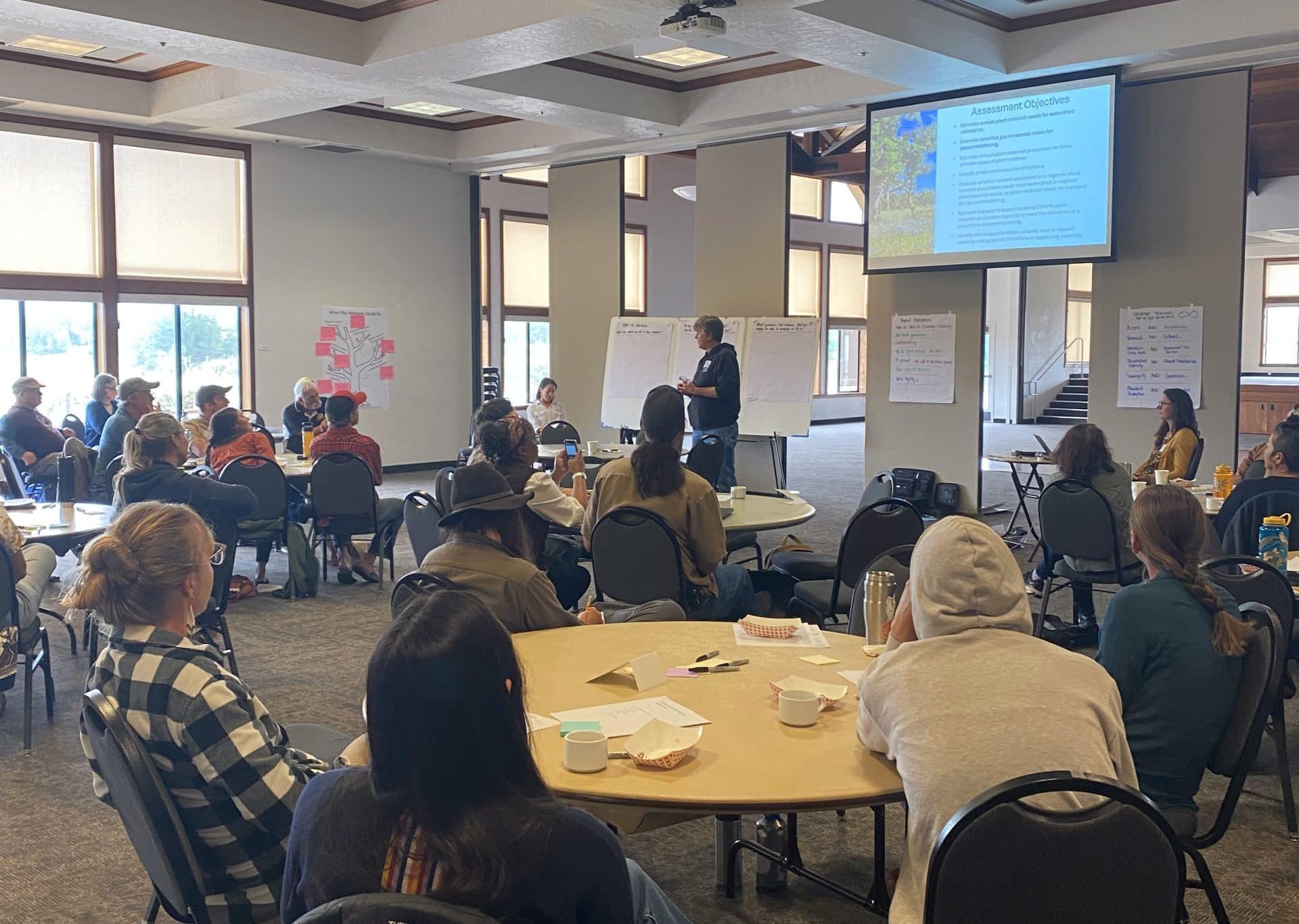
This June, the Eel River Native Plant Network held its first in-person meeting in Fortuna with about 45 people in attendance. The Native Plant Network seeks to connect Tribal Nations, stewards, gatherers, and growers to sustain and increase diverse native plant material production that supports Eel River ecosystem restoration, cultural uses, and food sovereignty.
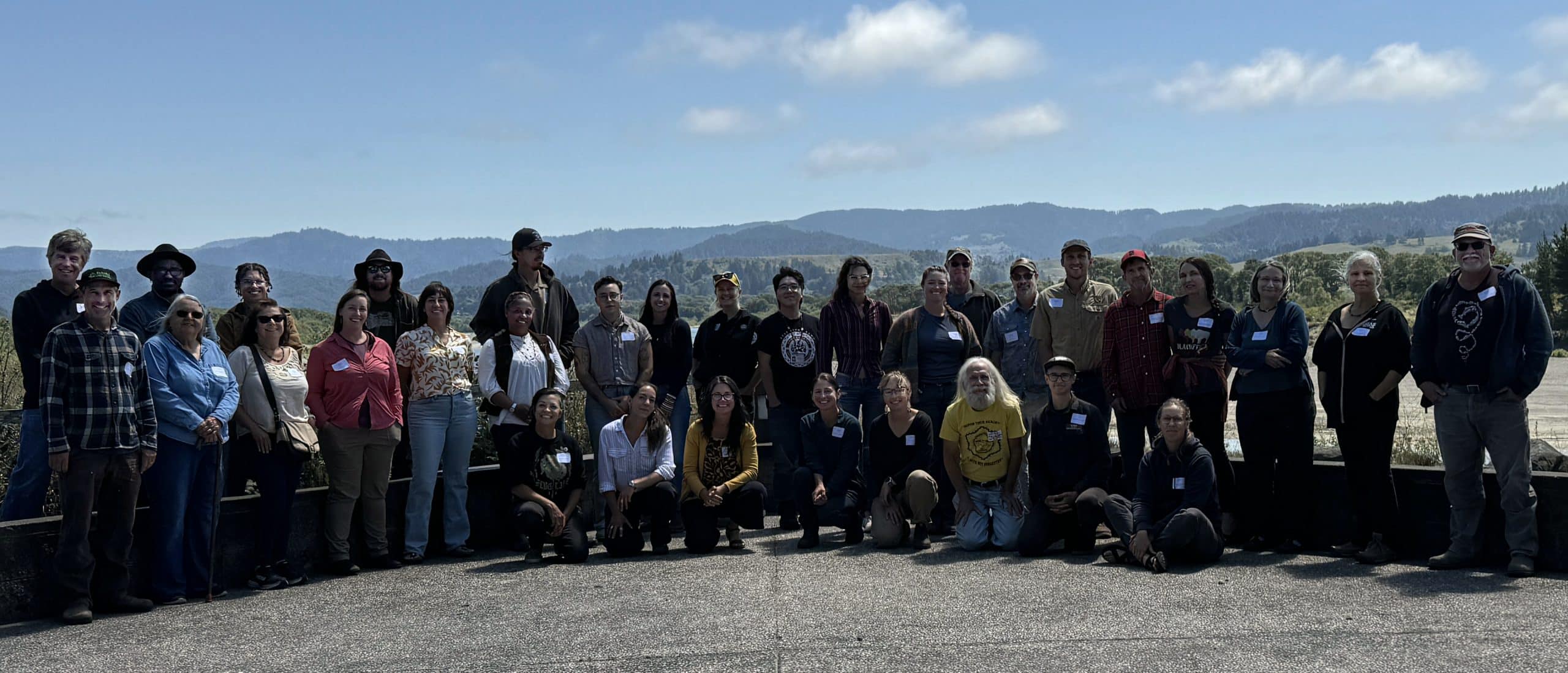
Network members include representatives of Tribal Nations, commercial nurseries, NGOs, private property owners, and regional, state, and federal agencies. Nearly 50 different entities have engaged with the Network. “This Network is all about collaboration, working together to strengthen grant proposals, sharing infrastructure and knowledge, and increasing production of locally native plants,” said Christina Cortez, Native Plant Materials Project Coordinator with the Mattole Restoration Council.
The idea for the network sprouted in early 2024 when staff at Friends of the Eel River were reflecting on the many years the Yurok Tribe and their allies spent collecting and amplifying seeds for restoration after dam removal on the Klamath River. According to Yurok Tribe’s Senior Riparian Ecologist Joshua Chenoweth, seed collection and amplification was conducted over five years to obtain over 72,000 lbs of native seed from 33 species. An additional ~80,000 lbs were purchased to supplement the custom-grown seed, for a total of nearly 160,000 lbs of seed used for the nearly 2,000-acre revegetation of the former reservoirs. Joshua is also helping to launch the Eel River Native Plant Network as a member of the seven-person Stewardship Team representing Tribes, NGOs, and commercial nurseries.
 “If the Yurok Tribe needed five years to collect enough seed to revegetate the Klamath reservoirs, we’ll need at least that much time to prepare for restoration following Eel River dam removal, as the acreage of the reservoirs on the Eel is slightly larger,” said Alicia Hamann, executive director for Friends of the Eel River. Up to 300,000 lbs of seed may be needed to revegetate the Lake Pillsbury and Van Arsdale Reservoirs on the Eel River, based on a preliminary estimate by John Bair of Applied River Sciences.
Although providing seed for dam removal is an obvious near term goal, the new Native Plant Network intends to serve a larger set of community needs as well. “As we spoke to more folks engaged in restoration work in the Eel basin, we learned that sourcing native plants for ecosystem restoration or cultural purposes is often really challenging. And very few plants and seeds currently used are produced from within the basin. Connecting all the folks working with native plants in the region seemed an obvious first step,” Alicia explained. Producing more native plants within the Eel basin can help preserve biodiversity and genetic integrity, create local jobs, and reduce the carbon footprint of restoration projects.
Through the end of 2026, the Network will assess regional needs and capacity to produce native plant materials. The Network is currently asking members of the restoration community to participate in a 15-minute survey that will help them gauge current native plant material use, demand, and production in the Eel River watershed. You can take the survey here through the end of July 2026.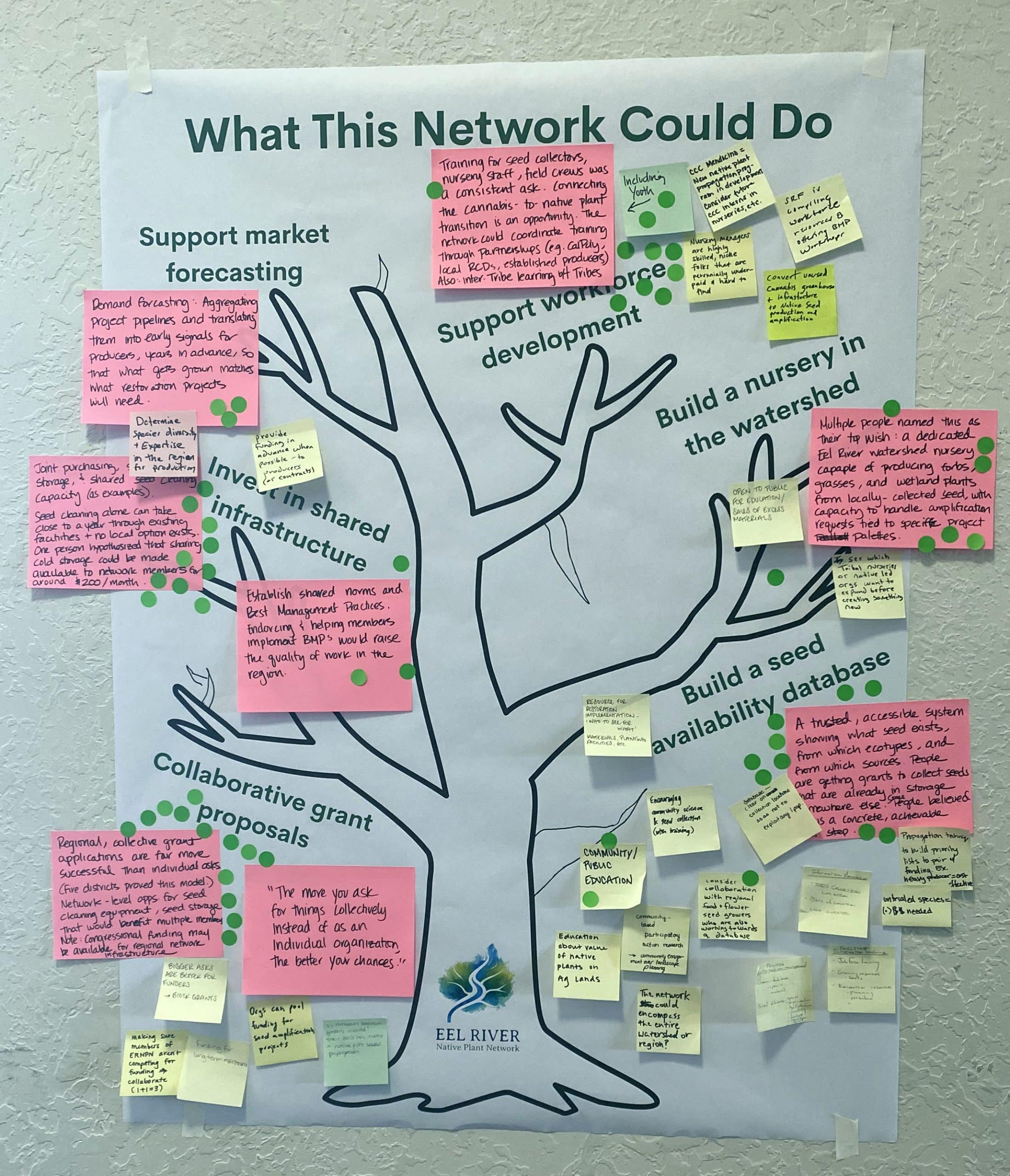
At the next in-person meeting in September, network members will work together to prioritize projects the Network can collaborate on with the goal of strengthening existing efforts or creating new opportunities for native plant production. By the end of the year the Network will produce a report detailing the regional capacity to source and produce native plant products, as well as an estimate of the quantity and diversity of native plants needed for revegetation following Eel River dam removal. “While the inspiration and initial focus of the Network is preparing for post-dam removal restoration, we envision this Network to be a generational project, supporting native plant restoration in and around the Eel basin for many years to come,” said Alicia Haman.
Funding for the Network is provided by the State Coastal Conservancy, and also includes support for knowledge sharing, field training, and seed collection by the Round Valley Indian Tribes and Yurok Tribe.
The Coastal Conservancy is a non-regulatory state agency that works with others along the California coast, in coastal watersheds, and in the San Francisco Bay Area to protect and restore coastal resources, to help people get to and enjoy the coast, and to enhance climate resilience. Its vision is of a beautiful, restored, and accessible coast for current and future Californians.
Anyone interested in becoming a member of the Network should visit EelRiverNativePlantNetwork.org, or contact Friends of the Eel River staff at NativePlantNetwork@eelriver.org.